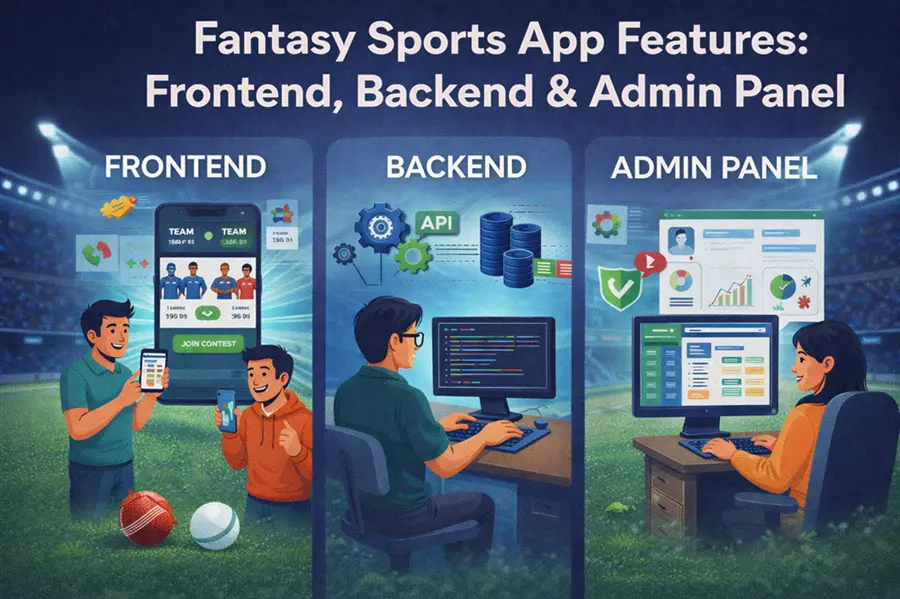
Fantasy Sports App Features: Frontend, Backend & Admin Panel
A fantasy sports app succeeds when it turns passive viewers into active players. Fans who follow matches want instant team creation, clear scoring, and fast feedback when their picks perform. The product must be intuitive from the first tap, but it also needs depth for serious players: historical stats, contest filters, and contest strategy signals. Design the experience so casual users can join and win quickly, while advanced users get the analytics and controls, they value. That balance increases conversions, raises retention, and makes user acquisition spend work harder.
Market size and why it matters to product decisions
India's fantasy sports market is growing quickly, which is important for investment and timing of new features. In 2024, it made about USD 786.7 million, and it is expected to grow even more by 2030 because of mobile access and more people watching sports. Worldwide, the fantasy sports market is worth billions of dollars and is expected to keep growing, encouraging teams to invest in better systems and features.
Events like the IPL see a big increase in user engagement and revenue. Reports showed that revenue during IPL matches went up a lot recently, with millions of users joining in. This shows that planning for growth is important for business strategies. Major platforms also changed their business models when rules about real-money contests changed, focusing more on ads and sponsors to keep users engaged and maintain revenue.
Frontend features that convert and retain users
The frontend is where users decide to stay or leave. Start with an easy sign-up process that lets a user join a contest in under two minutes. Clearly show the contest rules, entry fees, and prizes before asking for payment or sign-up. Use drag-and-drop features and clear budget indicators for team-building screens, so users know what they are giving up while creating a team. Live match screens should update automatically without needing to reload, showing real-time scores, player changes, and captain points.
Personalization is important: show recent contest history, saved team setups, and suggested contests based on the user’s skill level. Showing friends' activities, leaderboard positions, and badges for wins can build trust. In-match interactions like mini-contests, captain swaps, and quick re-entry offers keep users engaged during breaks. Lastly, make sure the app has simple features for users with slow internet so it works well on different devices and in various markets.
Also Read: - The Booming Fantasy Sports App Market: Reasons and Opportunities
Backend features that power real-time play and trust
The backend needs to be reliable and provide quick real-time scores. Create a scoring system that tracks each play, turns them into points, and sends updates within seconds. Use event-driven systems with message queues to handle scores and share them with game sessions. Keep the main match information in one place to avoid problems during captain changes or last-minute player swaps.
Support a strong contest system that handles entries, prizes, refunds, and disputes. Connect with trusted score sources and add checks to fix any score differences. Set limits on requests, use unique keys for repeated actions, and manage errors for payments and contest results. Monitor important areas—delays, transaction failures, and score changes—to find issues before they reach users. Finally, build a flexible backend so you can easily add new features like tournament types, multi-sport contests, or live streaming without having to start over.
Admin panel features that keep the business running
The admin panel is where product, finance, and moderation teams manage their work. It shows real-time data about contests, user activity, and payments, helping teams respond quickly during busy times. Moderators have tools to check suspicious accounts, pause contests, and give refunds while keeping records for compliance. There should be easy contest management so marketing can create branded contests and special offers without needing help from engineers.
Fraud reports and analytics should be in the admin console. Teams can mark accounts, block suspicious devices, and analyze collusion trends. Payment screens need to show failed payments, chargebacks, and pending KYC issues, allowing finance teams to export data easily. Lastly, the system should limit access based on roles, so each team only sees the tools they need.
Must Read: - Build a Dream11-Style Platform with Expert Fantasy Cricket Developers
Tech stack and architecture for scale
Pick a tech setup that allows fans to interact in real-time and makes it easy to update features. For the frontend, use native iOS and Android for the best experience; you can use a cross-platform option if you're okay with some differences in how things look and work on each platform. Use websockets or other real-time tools for live updates. On the backend, choose event-driven microservices that can easily grow and a strong database for keeping track of contests and transactions.
Caching helps but be careful with how long you keep score data. Use CDN edge caching for static files and send push notifications. Be ready for sudden traffic spikes during big matches by having autoscaling, circuit breakers, and a backup plan (like read-only leaderboards) for when things go wrong. For payments and user identity, work with trusted companies and keep the payments system flexible so you can change providers easily based on the region.
Security, compliance and fraud prevention
Security and rules help protect users and the business. Use strong identity checks when needed, know your customer (KYC) steps for prize payments, and multi-factor authentication for important account actions. Keep sensitive data safe and only store the personal information you really need to lower risk. Watch for unusual activity with tools that can detect odd contest behaviors, unlikely winning streaks, or multiple accounts from the same device.
There is a real risk of rules changing quickly. Create contest rules that can work for both paid and free players and be ready to change prizes if cash payouts are not allowed. Keep records of all important actions to help solve disputes and show that you are following the rules to regulators and partners.
Also Read: - Top 7 Proven Fantasy Sports App Monetization Models That Work
Monetization, user value and fantasy app development cost
To make money from users, it’s important to be fair while keeping the business running. Offer different types of contests: free ones with sponsors, low-cost small contests, and more expensive long contests. Use ads, brand prizes, and offer for merchandise or event tickets. Subscriptions for better analytics and no ads can bring steady income from dedicated users. Be clear about fees and when users will get paid—this builds trust and keeps users around.
For building a fantasy app, costs vary based on what you want. A simple version with apps for Android and iOS, a basic scoring system, payment options, and admin tools usually costs less. A full-featured app that can handle many users, has complex contest rules, and good fraud protection will cost more. To save money initially, start with a basic reliable version, then add advanced features later. If you want a detailed cost and timeline breakdown based on features, an experienced partner can help after a quick discussion.
Choosing the right partner: why the best fantasy app development company matters
You need a partner who knows about sports timing, engineering, and what sports fans want. The best company for fantasy app development should have clear experience with score updates, contest systems, and game day processes. They should also help after launch by watching for issues, preventing fraud, and fixing problems quickly during events like the IPL. An example of a helpful partner is Dinoustech Private Limited, which works with sports and mobile apps and can assist with planning and launching your product. Choosing a skilled company makes it easier to learn, reduces risks, and helps you make money during tournaments.
Must Read: - Advantages of Developing Fantasy Sports Apps: Increasing User Involvement
Launch strategy, growth and retention mechanics
When you launch, pick the right time. Focus on getting people to sign up before the season starts, work with popular figures to create private leagues, and test your live scoring when there’s less risk. Encourage growth by using referral programs and friend leagues. On game days, make sure your service is always up and support is quick, as problems during big games can lose users for a long time. Keep users coming back by offering reliable rewards, fun contest types, and new promotions between major events.
Track important numbers: how many users are active on game days, how many leave between games, the value of users over time, how quickly they join contests, and how often there are disputes. Test different prices for contests, how often you send notifications, and how you welcome new users. Use this information to improve your product and marketing so you keep costs manageable.
Next steps and a practical checklist
Start with a short planning phase to list your key features, necessary connections (like score updates, payments, and user verification), and rules for different markets. Create a basic version of your app that focuses on team setup, live scoring, and contest results. Make a guide for your operations on match days, including a plan for dealing with problems and extra support. After your app is live, focus on improving key metrics: make scoring faster, better detect fraud, and personalize the experience to keep users engaged. If you need help making a step-by-step plan and a clear cost estimate for building your fantasy sports app, an experienced team can create a 6–12 week plan with a detailed cost breakdown.