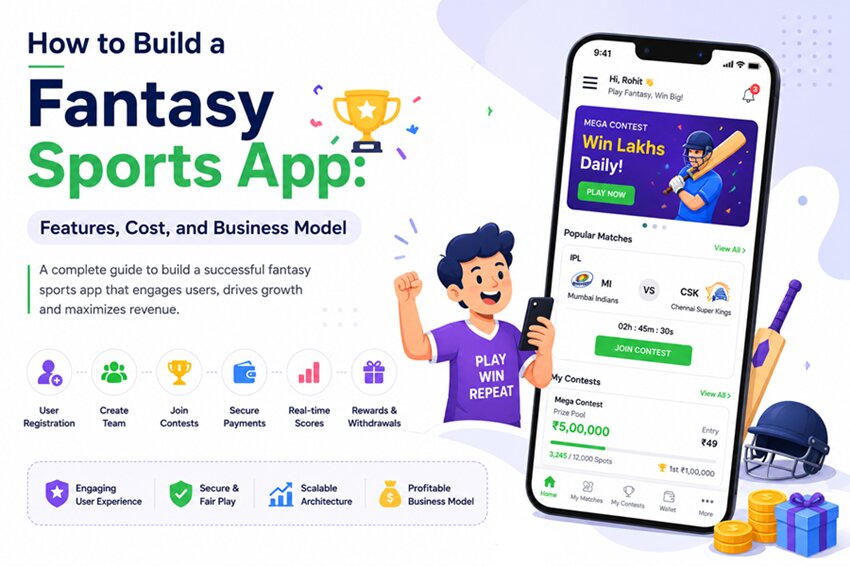
How to Build a Fantasy Sports App: Features, Cost, and Business Model
Fantasy sports apps have moved far beyond being a seasonal entertainment product. Today, they are complete digital ecosystems where users create teams, track live match performance, compete in contests, and win rewards based on skill-based gameplay. That mix of sports, strategy, real-time data, and community engagement is exactly why fantasy platforms continue to attract users and investors.
For businesses, the opportunity is clear: fantasy sports apps can generate revenue through entry fees, subscriptions, ads, and premium features, while also building long-term user loyalty through repeat engagement. But success does not come from launching a basic app and hoping users stay. It requires the right product structure, smart feature planning, scalable technology, and a monetization model that fits your target audience.
In this guide, we will break down fantasy sports app development in a simple way. You will learn what the app actually does, which features matter most, how much it may cost, which business model works best, and what development process can help you launch a strong product for 2026 and beyond.
What Is Fantasy Sports App Development?
Fantasy sports app development is the process of building a mobile or web application where users create virtual teams from real athletes and earn points based on real-world sports performance. The app connects live sports data with in-app scoring logic, which is what makes the experience interactive, competitive, and highly engaging.
A fantasy sports app is not just a scoreboard or a simple game. It is a product that usually includes registrations, contest creation, player selection, live updates, wallets, payment processing, rankings, and administrative controls. Depending on your business plan, the app can focus on one sport, multiple sports, daily contests, or long-season leagues.
Fantasy Sports App at a Glance
|
Element
|
What It Means
|
Why It Matters
|
|
Real-world sports data
|
Live match and player information
|
Keeps the game accurate and timely
|
|
Team creation
|
Users build virtual squads
|
Creates strategy-driven engagement
|
|
Scoring engine
|
Points are assigned based on real performance
|
Makes the game competitive
|
|
Contests and leagues
|
Users join paid or free competitions
|
Drives repeat usage and monetization
|
|
Wallet/payment module
|
Users add funds or withdraw winnings
|
Supports transactions and trust
|
Fantasy sports platforms succeed when they are designed around one core idea: users should feel that their sports knowledge directly influences their chances of winning. That is why speed, fairness, and clarity matter so much in the product design.
Also Read: - Grow Your Sports Business with Fantasy Sports App Development
Why Fantasy Sports Apps Continue to Grow
Fantasy sports are popular because it turns passive sports watching into active participation. Instead of simply watching a match, users draft teams, monitor player performance, and compete with friends or strangers. That creates stronger engagement than many other app categories because users return before, during, and after games.
For founders, this is valuable because repeat engagement usually means stronger retention and more monetization opportunities. When users keep coming back for contests, updates, and rewards, the app becomes more than a product; it becomes a habit. That is one reason fantasy apps are often built with live scoring, leaderboards, wallets, and social features from the beginning.
Types of Fantasy Sports Apps You Can Build
Before you start development, it is important to choose the right app type. Some products focus on quick contests, while others focus on seasonal leagues or social gameplay. The model you choose affects the feature set, timeline, and cost.
Fantasy Sports App Types
|
Type of App
|
Best For
|
Key Characteristics
|
|
Daily fantasy sports app
|
Short-term contests
|
Fast gameplay, frequent results, quick user turnaround
|
|
Multi-sport fantasy app
|
Broad audience
|
Supports multiple sports in one platform
|
|
Season-long fantasy app
|
Dedicated sports fans
|
Long-term team management and league participation
|
|
Social fantasy app
|
Community-driven users
|
Chat, private leagues, and friend competition
|
|
Niche fantasy app
|
Specific sports communities
|
Focused on one sport or a smaller fan base
|
Daily fantasy platforms are useful when you want fast contests and frequent user activity. Multi-sport apps work better when you want broader reach. Seasonal apps are ideal for long-term retention, while social fantasy apps can build a strong community around the product. Niche apps are often easier to position because they serve a specific and passionate audience.
Must Read: - Top 7 Proven Fantasy Sports App Monetization Models That Work
Must-Have Features in a Fantasy Sports App
A fantasy sports app needs the right mix of user-facing and admin-side features. Basic features are not enough if you want the product to feel trustworthy and competitive. The most successful platforms combine smooth onboarding, live updates, secure payments, and effective contest management.
User-Side Features
|
Feature
|
Purpose
|
Why Users Care
|
|
Sign-up and login
|
Simple registration via email, phone, or social accounts
|
Easy onboarding increases conversions
|
|
Profile management
|
Store user data and preferences
|
Makes the experience personalized
|
|
Team creation
|
Build fantasy squads
|
Core action that drives engagement
|
|
Live scoring
|
Update points in real time
|
Keeps the game exciting and transparent
|
|
Leaderboard
|
Show rankings
|
Encourages competition
|
|
Wallet
|
Manage deposits, winnings, and withdrawals
|
Supports cash contests and trust
|
|
Payment gateway
|
Process transactions securely
|
Essential for paid contests
|
|
Notifications
|
Match reminders, score updates, contest alerts
|
Brings users back to the app
|
|
Social sharing
|
Share teams and results
|
Helps with organic growth
|
|
Match stats and player data
|
View performance insights
|
Helps users make smarter picks
|
Admin-Side Features
|
Feature
|
Purpose
|
Why It Matters
|
|
User management
|
Control user accounts and verification
|
Supports security and moderation
|
|
Contest management
|
Create, edit, and manage contests
|
Keeps the platform active
|
|
Scoring rules
|
Configure point systems
|
Ensures fairness and flexibility
|
|
Payment management
|
Handle refunds, deposits, and payouts
|
Critical for financial control
|
|
Content management
|
Manage banners, news, and promotions
|
Improves marketing and updates
|
|
Reports and analytics
|
Track performance and revenue
|
Helps optimize business decisions
|
|
Fraud prevention
|
Detect suspicious activity
|
Protects platform integrity
|
The feature split above follows the common user/admin structure used in leading fantasy app guides. This is one of the easiest ways to plan MVP scope because it helps you decide what users must see first and what internal controls are needed behind the scenes.
Advanced Features Worth Considering
|
Advanced Feature
|
Business Value
|
|
AI-based team suggestions
|
Improves user decision-making
|
|
Personalized recommendations
|
Increases session time and retention
|
|
Predictive analytics
|
Helps users choose smarter lineups
|
|
Live chat and community tools
|
Strengthens engagement
|
|
Blockchain-based transparency
|
Can improve trust in payouts and records
|
|
AR/VR experiences
|
Creates a more immersive sports environment
|
|
Multi-language support
|
Expands reach into new regions
|
|
Multi-currency support
|
Helps when targeting international users
|
These are not must-have MVP features, but they can become strong differentiators if your goal is to stand out in a crowded fantasy sports market.
Fantasy Sports App Development Process
A successful fantasy sports app is usually built in stages. The best approach is to start with market research, define the MVP, design the experience, select the right tech stack, and then test thoroughly before launch.
Step-by-Step Development Process
|
Step
|
What Happens
|
Output
|
|
1. Market research
|
Study competitors, users, and sports categories
|
Product direction and target audience
|
|
2. Feature planning
|
Decide MVP and advanced features
|
Clear scope
|
|
3. UI/UX design
|
Create wireframes and app screens
|
User journey and visual structure
|
|
4. Tech stack selection
|
Choose frontend, backend, database, and APIs
|
Architecture plan
|
|
5. Backend development
|
Build scoring engine, wallets, contests, and APIs
|
Core system
|
|
6. Frontend development
|
Create user-facing screens
|
App interface
|
|
7. Integrations
|
Connect payment, live data, notifications, and analytics
|
Full functionality
|
|
8. QA testing
|
Test bugs, performance, and security
|
Stable product
|
|
9. Launch
|
Publish app and start acquisition
|
Live product
|
|
10. Maintenance
|
Fix issues and add features
|
Long-term growth
|
The main goal of this process is to reduce risk. Fantasy apps rely on live data and real-time activity, so even small product mistakes can hurt trust. That is why planning, testing, and scalable architecture matter from day one.
Also Read: - The Booming Fantasy Sports App Market: Reasons and Opportunities
Which Technology Stack Is Best for a Fantasy Sports App?
The best stack depends on your budget, speed goals, and performance expectations. Fantasy sports apps often need fast scoring updates, smooth UI, and secure transactions, so backend stability is especially important. In many cases, cross-platform or native development is preferred over a very lightweight hybrid approach because live, high-traffic gameplay needs better performance.
Recommended Tech Stack Table
|
Layer
|
Common Options
|
Role in the App
|
|
Frontend
|
Flutter, React Native, Swift, Kotlin
|
Builds the app interface
|
|
Backend
|
Node.js, Python, PHP, Java
|
Handles business logic and APIs
|
|
Database
|
PostgreSQL, MySQL, MongoDB
|
Stores users, contests, transactions
|
|
Cloud
|
AWS, Google Cloud, Azure
|
Supports scalability and uptime
|
|
Real-time updates
|
WebSockets, push services
|
Delivers live scoring
|
|
Payments
|
Razorpay, Stripe, PayPal
|
Handles deposits and withdrawals
|
|
Analytics
|
Firebase, Mixpanel, GA4
|
Tracks user behavior
|
|
Notifications
|
Firebase Cloud Messaging, OneSignal
|
Sends alerts and reminders
|
Native vs Cross-Platform vs Hybrid
|
Development Approach
|
Best For
|
Advantages
|
Limitations
|
|
Native
|
High-performance apps
|
Best speed, best device integration
|
Higher cost and longer development
|
|
Cross-platform
|
MVPs and faster releases
|
Shared codebase, quicker launch
|
Slight performance trade-offs
|
|
Hybrid
|
Very low initial budgets
|
Lower upfront cost
|
Limited experience and weaker performance
|
For a fantasy sports product, native is often the best option when performance is the top priority, while cross-platform works well when you need to launch faster and control costs. Hybrid is usually the least preferred choice for a serious platform because fantasy apps depend heavily on responsiveness and real-time interaction.
How Much Does It Cost to Build a Fantasy Sports App?
Fantasy sports app development cost depends on app complexity, number of sports supported, integrations, design depth, compliance needs, and the team’s location. In the competitor’s published guide, a simple app is estimated at about $5,000–$20,000, a moderate app at $20,000–$80,000, and a complex app at $80,000–$150,000 or more, with timelines increasing as the product becomes more advanced.
Cost Breakdown by Complexity
|
App Type
|
Estimated Cost
|
Estimated Timeline
|
Best Fit
|
|
Simple MVP
|
$5,000–$20,000
|
3–6 months
|
Testing a concept
|
|
Mid-level app
|
$20,000–$80,000
|
6–9 months
|
Growing startup product
|
|
Advanced platform
|
$80,000–$150,000+
|
9–12+ months
|
Large-scale business
|
These are practical development estimates, not fixed prices. The final budget changes based on what you build, how many integrations you need, and whether you are creating for one sport or multiple sports.
What Affects the Cost?
|
Cost Factor
|
How It Impacts Budget
|
|
Features
|
More features increase design and development effort
|
|
App complexity
|
Advanced logic takes more time to build and test
|
|
Third-party integrations
|
Payment and sports data APIs add cost
|
|
Compliance
|
Legal and policy requirements raise project scope
|
|
Development model
|
Native costs more than cross-platform in most cases
|
|
Team location
|
Rates vary by region and experience level
|
|
Real-time data licensing
|
Live sports data can raise ongoing expenses
|
|
Scalability
|
High traffic support requires stronger infrastructure
|
Feature scope is usually the biggest cost driver. Adding wallets, live scoring, multi-sport support, chat, AI recommendations, and admin controls can quickly move a project from a simple MVP into a significantly more expensive product.
Sample Budget Planning Table
|
Budget Range
|
What You Can Build
|
|
Under $20,000
|
Basic fantasy MVP with essential features
|
|
$20,000–$50,000
|
Better UI, live scoring, wallet, contest setup
|
|
$50,000–$100,000
|
Multi-sport platform with advanced admin tools
|
|
$100,000+
|
Scalable product with premium features, analytics, and stronger security
|
Fantasy Sports App Business Model
A fantasy sports app can make money in several ways. The best business model usually combines multiple revenue streams instead of relying on only one. That creates flexibility and improves revenue stability. Common monetization methods include freemium access, in-app ads, subscriptions, and contest entry fees.
Monetization Models Explained
|
Business Model
|
How It Works
|
Best For
|
|
Freemium
|
Basic features free; premium upgrades paid
|
Broad user acquisition
|
|
Subscription
|
Users pay monthly or yearly for premium tools
|
Expert-focused apps
|
|
Contest entry fees
|
Users pay to join contests
|
Cash contest platforms
|
|
In-app advertisements
|
Brands pay for ad space
|
High-traffic free apps
|
|
Sponsored contests
|
Brands sponsor tournaments or seasons
|
Large, engaged communities
|
|
Premium analytics
|
Advanced stats sold as add-ons
|
Serious fantasy players
|
Which Model Works Best?
|
Goal
|
Best Monetization Choice
|
|
Rapid user growth
|
Freemium
|
|
Maximum recurring revenue
|
Subscription
|
|
Direct cash contest income
|
Entry fees
|
|
Free app with ad revenue
|
In-app advertising
|
|
B2B partnerships
|
Sponsored contests
|
The strongest business model is usually a blended one. For example, a fantasy app can be free to join, charge entry fees for contests, offer subscriptions for advanced insights, and still earn from brand partnerships or ads. That gives the business more room to scale.
Legal and Compliance Considerations
Fantasy sports apps must be planned carefully from a legal and compliance perspective. Since the product may involve real-money contests, user data, and sports-related rules, business owners need to build trust and reduce risk from the very beginning. A competitor guide also highlights privacy, fair play, intellectual property, gambling compliance, and ad compliance as important considerations.
Compliance Checklist
|
Area
|
What You Need to Watch
|
|
Data privacy
|
Protect user information and transaction data
|
|
Fair play
|
Prevent cheating and manipulation
|
|
IP rights
|
Avoid misuse of player names, logos, or content
|
|
Gambling laws
|
Check regional rules before launching paid contests
|
|
Advertising rules
|
Ensure promotions are truthful and compliant
|
|
Payment safety
|
Keep transactions secure and auditable
|
Because legal requirements vary by country and sometimes by state or province, it is always smart to review local regulations before launch and before enabling paid contests.
Advanced Features That Can Help You Stand Out
The fantasy sports market is competitive, so basic functionality alone is rarely enough to win attention for long. Strong products use advanced features to improve retention, make decisions easier, and create a more engaging user experience.
Differentiation Table
|
Feature
|
Why It Helps
|
|
AI lineup suggestions
|
Makes the app smarter and more useful
|
|
Personalized dashboards
|
Improves user satisfaction
|
|
Push-based match insights
|
Keeps users active during games
|
|
Community leagues
|
Builds social loyalty
|
|
Blockchain records
|
Can support transparency
|
|
Immersive AR elements
|
Creates a premium experience
|
|
Fast live data sync
|
Improves trust and usability
|
|
Multi-language support
|
Expands into more markets
|
These upgrades are especially useful once your MVP is validated. They help transform a good app into a product that people remember and keep using.
Must Read: - How to Create a Fantasy Sports App Like Vision11 from Scratch
Popular Fantasy Sports App Examples
Looking at successful fantasy products is useful because it shows how different positioning strategies work. Some platforms are multi-sport and beginner-friendly, while others focus on daily contests, social play, or cricket-heavy markets.
|
App
|
Type
|
Notable Strength
|
|
ESPN Fantasy Sports
|
Multi-sport seasonal fantasy
|
Broad coverage and easy UI
|
|
Yahoo Fantasy Sports
|
Multi-sport fantasy with DFS
|
Strong draft tools and beginner-friendly flow
|
|
Sleeper
|
Social fantasy app
|
Community-driven experience
|
|
FanDuel
|
Daily fantasy sports
|
Cash contests and fast gameplay
|
|
DraftKings
|
Daily fantasy sports
|
Deep stats and contest variety
|
|
Dream11
|
Multi-sport fantasy
|
Strong cricket focus and private leagues
|
These examples show that fantasy success does not come from copying one exact format. It comes from choosing a clear audience, a strong engagement style, and a revenue model that fits the experience.
Why Choose Dinoustech for Fantasy Sports App Development?
Dinoustech can position itself as a partner that helps businesses move from idea to launch with a structured product strategy, modern UI/UX, scalable development, and monetization planning. A fantasy sports app is not just a coding project; it is a live product that needs performance, reliability, and business clarity. That is where an experienced development team makes a real difference.
Here is a simple way to present Dinoustech’s value proposition:
|
Dinoustech Strength
|
What It Means for Clients
|
|
Product strategy
|
Better feature planning and MVP scope
|
|
UI/UX design
|
Cleaner user experience and higher retention
|
|
Scalable architecture
|
Better support for live users and real-time updates
|
|
API integration
|
Smooth sports data and payment flows
|
|
Admin panel development
|
Easier control over contests, users, and payouts
|
|
Ongoing support
|
Reliable post-launch optimization
|
A strong fantasy sports platform needs more than attractive screens. It needs stable scoring logic, safe payments, strong data handling, and a business model that can grow with the audience.
Final Thoughts
Fantasy sports app development is a high-opportunity space for businesses that want to combine sports, strategy, and monetization. The most effective products are built on a clear feature roadmap, a scalable technology stack, and a business model that supports growth from day one. Whether you are launching a simple MVP or a fully featured multi-sport platform, planning matters more than rushing to launch.
If you want your app to compete in the market, focus on the essentials first: smooth sign-up, real-time scoring, team creation, secure wallets, contest management, and a user experience that feels fast and trustworthy. Once that core is stable, advanced features like AI, community tools, and premium analytics can help you stand out.