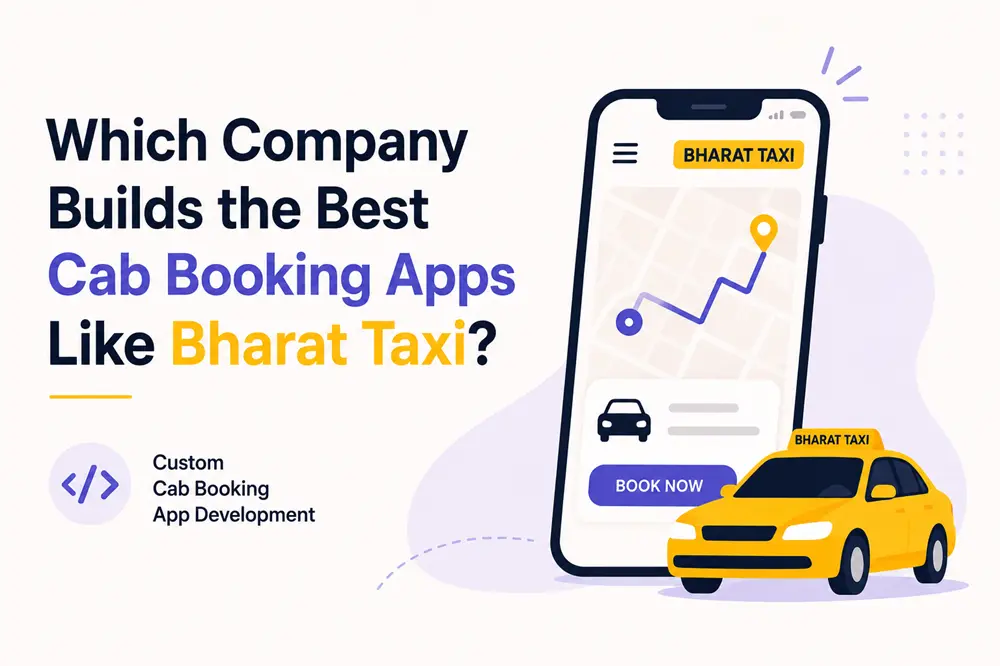
Which Company Builds the Best Cab Booking Apps Like Bharat Taxi?
The way people travel within cities has changed significantly in recent years. Customers no longer want to wait on roads, negotiate fares, or search for available vehicles manually. They prefer booking a cab through mobile applications that provide instant availability, transparent pricing, real-time tracking, and secure digital payments.
This growing demand has created strong opportunities for businesses planning to build their own ride-hailing platforms. From startups and transport companies to fleet owners and mobility businesses, many organizations are investing in custom taxi booking applications to connect passengers and drivers through a single digital platform.
The rise of platforms like Bharat Taxi has further increased interest in building local and national-level cab booking solutions. Bharat Taxi is India's first cooperative-based ride-hailing platform that focuses on driver ownership and digital mobility services. The platform was developed under the cooperative model, where drivers, known as Sarathis, participate in ownership and value creation.
The global ride-hailing market continues to expand because users increasingly depend on smartphones for transportation needs. Businesses are now looking beyond basic taxi booking features and investing in advanced solutions with AI-based recommendations, real-time analytics, fleet management, and personalized customer experiences.
A report by market research organizations shows that the global ride-hailing market is expected to continue growing due to increasing urbanization, smartphone adoption, and demand for convenient transportation services. This growth creates opportunities for entrepreneurs who want to build scalable taxi platforms for specific regions or large markets.
A successful taxi application requires more than just a booking feature. Businesses need a complete ecosystem that includes passenger apps, driver apps, admin dashboards, payment systems, GPS tracking, analytics, and reliable backend infrastructure.
This is where choosing the right cab booking app development company becomes important. An experienced development partner helps businesses create applications that match customer expectations while supporting long-term business growth.
Why Bharat Taxi Is Gaining Attention
Bharat Taxi has gained attention because it introduces a different approach to the ride-hailing ecosystem. Instead of following only a commission-based structure, the platform focuses on a cooperative model where drivers become important stakeholders in the platform.
The platform aims to provide digital booking facilities, transparent operations, and better opportunities for drivers. It highlights how technology can support both passengers and service providers through a well-designed mobility platform.
For businesses, Bharat Taxi provides valuable insights into what modern users expect from transportation applications:
- Quick ride booking
- Accurate location tracking
- Transparent pricing
- Secure payment options
- Driver verification
- Safety features
- Easy communication between riders and drivers
However, building an app similar to Bharat Taxi requires careful planning. Businesses cannot achieve success by simply copying existing applications. They need to understand their target market, customer expectations, regional requirements, and operational challenges.
A professional taxi app creation company focuses on developing customized solutions based on specific business goals. Whether a company wants to serve a single city or operate across multiple locations, the application architecture must support future expansion.
For example, a local taxi operator may require basic booking and fleet management features, while a large mobility company may need advanced systems for thousands of drivers, multiple vehicle categories, corporate bookings, and real-time analytics.
The success of any taxi platform depends on how effectively it connects technology with real-world transportation needs.
Also Read: - How Much Does Cab Booking App Development Cost in 2026?
What Makes a Great Cab Booking App?
A successful cab booking application focuses on three major users: passengers, drivers, and administrators. Each group requires different features and a smooth experience.
For passengers, the application should make booking simple. Users should be able to register quickly, enter pickup and destination locations, select vehicle types, view estimated fares, track drivers, complete payments, and provide feedback.
For drivers, the application should simplify daily operations. Drivers need tools to accept rides, manage availability, view earnings, navigate routes, and communicate with passengers.
For business owners, the admin panel should provide complete control over operations. They need access to driver management, customer information, payments, reports, promotions, and performance analytics.
A high-quality cab booking application also needs strong technical performance. Slow loading times, inaccurate GPS information, payment failures, or complicated booking processes can negatively affect user retention.
Experienced taxi app developers understand these challenges and build applications that focus on speed, reliability, and scalability.
Modern taxi apps also use technologies such as artificial intelligence, cloud computing, and data analytics to improve operational efficiency. AI can help predict demand, optimize routes, identify suspicious activities, and improve driver-passenger matching.
Businesses should also focus on continuous improvement after launch. User feedback, market trends, and performance data help companies improve their applications and add features that customers actually need.
Essential Features Every Taxi Booking App Needs
A feature-rich taxi booking application creates a better experience for passengers and drivers. While every business may require different functionalities, some features are essential for almost every modern taxi platform.
Passenger Application Features
The passenger app is the main customer-facing platform. It should include simple registration, profile management, GPS-based location detection, ride booking, fare calculation, ride history, online payments, ratings, reviews, and customer support.
Real-time tracking is one of the most important features because passengers want to know their driver's exact location and estimated arrival time.
Push notifications also improve engagement by updating users about booking confirmations, driver arrival, promotions, and payment information.
Driver Application Features
The driver application helps service providers manage their daily activities efficiently. Important features include driver registration, document verification, ride requests, navigation support, earnings tracking, availability status, and trip history.
A simple driver interface helps increase acceptance rates and reduces operational difficulties.
Admin Dashboard Features
The admin dashboard works as the control center of the entire platform. It allows businesses to manage drivers, customers, payments, complaints, pricing, promotions, and analytics.
Advanced dashboards can provide insights into:
- Number of completed rides
- Revenue performance
- Driver activity
- Customer retention
- Popular locations
- Peak booking hours
These insights help businesses make better decisions and improve their services.
A professional mobile app development company combines these features with strong backend systems to create reliable transportation platforms. Businesses that also need web-based management solutions can work with an experienced web development company to build responsive admin panels and customer portals.
Must Read: - Which Features Make a Cab Booking App Successful
Technology Stack Behind Modern Taxi Apps
The success of a taxi booking platform depends not only on its features but also on the technology that powers it. A reliable technology stack helps the application process thousands of ride requests, track drivers in real time, manage payments securely, and deliver a smooth experience even during peak demand.
Most businesses today choose either native or cross-platform development based on their budget and long-term goals. Native development uses Kotlin for Android and Swift for iOS, offering excellent performance and device optimization. Cross-platform frameworks such as Flutter and React Native allow developers to build Android and iOS applications from a single codebase, reducing development time and maintenance costs.
On the backend, technologies such as Node.js, Laravel, Python, or Java manage ride requests, user authentication, notifications, and payment processing. Databases like PostgreSQL and MongoDB securely store user information, trip history, and driver records, while cloud platforms such as AWS, Microsoft Azure, and Google Cloud provide the scalability required for growing businesses.
Real-time GPS tracking remains one of the most important components of any taxi booking application. Integration with mapping services enables accurate driver locations, optimized routes, estimated arrival times, and traffic-aware navigation.
An experienced cab booking app development company selects the right technologies according to your business objectives rather than following a fixed development model. This ensures that your application can grow without requiring a complete rebuild in the future.
Modern taxi applications also integrate Artificial Intelligence to improve operational efficiency. AI helps optimize driver allocation, predict ride demand, reduce waiting times, detect fraudulent activities, recommend better routes, and provide personalized offers based on customer behavior. These technologies improve both customer satisfaction and business profitability.
How Much Does It Cost to Build a Cab Booking App Like Bharat Taxi?
One of the first questions entrepreneurs ask is how much investment is required to build a platform similar to Bharat Taxi. The answer depends on several factors, including application complexity, supported platforms, custom features, integrations, and the size of the development team.
A basic taxi booking application with passenger registration, driver registration, ride booking, GPS tracking, fare estimation, online payments, and an admin dashboard generally costs between $15,000 and $30,000.
A medium-scale solution with multiple vehicle categories, promotional campaigns, ride scheduling, multilingual support, analytics dashboards, driver earnings management, and customer loyalty programs typically ranges from $30,000 to $50,000.
An enterprise-level mobility platform with AI-powered dispatching, dynamic pricing, fleet management, corporate booking modules, advanced analytics, cloud scalability, and multi-city operations may cost $50,000 to $100,000 or more, depending on business requirements.
Several factors influence the final development budget:
- Number of supported platforms
- UI and UX complexity
- Third-party API integrations
- Payment gateway implementation
- GPS and mapping services
- Security requirements
- Cloud infrastructure
- AI-powered features
- Testing and quality assurance
- Post-launch maintenance
Businesses should also allocate a separate budget for application maintenance. Regular updates, security improvements, server monitoring, operating system compatibility, cloud hosting, and feature enhancements usually require 15–20% of the initial development cost annually.
Working with experienced taxi app developers helps reduce unnecessary expenses because they design scalable architectures from the beginning, avoiding costly redevelopment later.
Also Read: - Cost to Build a Cab Booking App Like Lyft
Revenue Models for Taxi Booking Apps
Developing a taxi booking application is only the first step. Building a sustainable revenue model is equally important for long-term business success.
The most widely used monetization model is the commission-based model, where the platform earns a percentage from every completed ride. This approach scales naturally as bookings increase.
Many platforms are also introducing subscription-based plans for drivers. Instead of paying commission on each ride, drivers pay a fixed weekly or monthly subscription fee. This model provides predictable income for the platform while allowing drivers to retain more of their earnings. Similar pricing approaches are increasingly being adopted across the ride-hailing industry.
Other profitable revenue streams include:
- Premium ride categories
- Airport transfer services
- Corporate transportation contracts
- Surge pricing during high-demand periods
- In-app advertising
- Driver verification services
- Vehicle rental programs
- Loyalty memberships
- Fleet management subscriptions
Businesses should choose a monetization strategy based on their target audience, operational model, and regional market conditions instead of relying on a single revenue source.
A reliable taxi app creation company can also help businesses identify additional revenue opportunities that fit their long-term business strategy.
Common Mistakes to Avoid During Development
Many taxi booking startups invest heavily in development but overlook critical planning decisions that affect long-term success.
One common mistake is trying to launch with too many features. Instead of building every possible function, businesses should prioritize core features that solve customer problems effectively. Starting with a focused MVP allows faster market validation and continuous improvement based on user feedback.
Another mistake is ignoring scalability. A platform that performs well with a few hundred users may experience performance issues once bookings increase significantly. Building scalable cloud infrastructure from the beginning prevents future operational challenges.
Some businesses also underestimate backend development. While passengers interact mainly with the mobile application, the backend handles ride matching, payment processing, notifications, route calculations, driver management, reporting, and customer support. Weak backend architecture often leads to slow performance and service interruptions.
Security should never be treated as an optional feature. Taxi booking platforms process personal information, payment details, and live location data. Secure authentication, encrypted communication, fraud prevention, and regular security updates are essential for protecting customer trust.
Finally, many businesses stop improving the product after launch. Successful mobility platforms continuously analyze customer behavior, monitor performance metrics, release feature updates, and optimize operations based on real-world usage. This ongoing improvement helps maintain customer satisfaction while remaining competitive in a rapidly evolving market.
Must Read: - How to Build a Cab Aggregator App for Local and Intercity Travel
How to Choose the Best Cab Booking App Development Company
Choosing the right development partner is one of the most important decisions when building a taxi booking platform. A well-designed application can help you attract customers, improve driver efficiency, and generate long-term revenue. However, even the best business idea can struggle if the development team lacks experience in mobility solutions.
Before selecting a cab booking app development company, evaluate its expertise in building transportation and on-demand applications. A company with experience in taxi booking platforms understands the challenges of GPS tracking, ride matching, payment integration, route optimization, driver management, and high-volume user traffic. This practical knowledge helps reduce development risks and shortens the time needed to launch your product.
A strong portfolio is another important factor. Review the company's previous projects to understand the quality of its user interface, application performance, security standards, and scalability. Client testimonials, case studies, and long-term customer relationships also indicate whether the company consistently delivers successful software solutions.
Technical expertise should also be part of your evaluation. Modern taxi booking applications require technologies such as Flutter, React Native, Kotlin, Swift, Node.js, Laravel, cloud infrastructure, payment gateway integration, Google Maps APIs, and AI-powered analytics. Your development partner should recommend technologies based on your business goals rather than using the same approach for every project.
Communication is equally important. The best development companies provide regular project updates, transparent pricing, milestone-based delivery, and dedicated project managers who keep clients informed throughout the development process.
Post-launch support should never be overlooked. Taxi booking applications require continuous maintenance, operating system updates, performance monitoring, security improvements, and feature enhancements. Choosing a company that offers long-term support ensures your application remains reliable as your business grows.
If your business requires both mobile and web platforms, partnering with an experienced web development company helps create a unified ecosystem where passenger apps, driver apps, and admin dashboards work together efficiently.
Why Choose Dinoustech for Taxi App Development?
Building a successful taxi booking platform requires more than software development. It requires industry knowledge, technical expertise, and a clear understanding of user expectations. Dinoustech has established itself as one of the trusted software development companies by delivering custom digital solutions for startups, SMEs, and enterprises across multiple industries.
As a professional cab booking app development company, Dinoustech focuses on building customized solutions rather than relying on pre-built templates. Every application is designed around the client's business model, target audience, and operational requirements.
The development process begins with business analysis and requirement gathering. The team works closely with clients to understand their goals before designing intuitive user interfaces and scalable system architecture. Throughout development, experienced taxi app developers implement secure coding practices, optimize application performance, and ensure smooth integration with GPS services, payment gateways, cloud infrastructure, and third-party APIs.
Dinoustech provides complete end-to-end development services, including:
- Business consultation and project planning
- UI and UX design
- Android and iOS application development
- Cross-platform app development
- Backend development and API integration
- Admin dashboard development
- Quality assurance and testing
- Cloud deployment
- Ongoing maintenance and technical support
The company also helps businesses integrate advanced technologies such as Artificial Intelligence, machine learning, predictive analytics, real-time reporting, and automated ride management systems. These technologies improve operational efficiency while enhancing the overall customer experience.
Businesses looking for a reliable taxi app creation company benefit from Dinoustech's focus on scalability, security, and long-term product growth. Whether you plan to launch a city-based taxi service, a nationwide ride-hailing platform, or a corporate transportation solution, the company delivers technology that supports future expansion.
By combining expertise as a mobile app development company and web development company, Dinoustech develops complete mobility ecosystems that include passenger applications, driver applications, dispatcher panels, fleet management systems, and web-based administrative portals.
Conclusion
The demand for digital transportation services continues to grow as customers expect faster, safer, and more convenient ways to book rides. Platforms like Bharat Taxi demonstrate how technology can improve both passenger experiences and driver operations while creating new opportunities for transportation businesses.
Building a successful taxi booking platform requires careful planning, the right technology stack, user-focused design, secure infrastructure, and continuous product improvement. Businesses should avoid relying solely on ready-made solutions and instead invest in custom software that supports long-term growth and changing market demands.
Choosing an experienced cab booking app development company gives your business a strong foundation for success. Skilled taxi app developers understand how to build scalable applications that handle increasing user traffic, integrate modern technologies, and deliver excellent user experiences.
If you are planning to build a taxi booking platform similar to Bharat Taxi, partnering with an experienced taxi app creation company like Dinoustech can help you transform your idea into a secure, scalable, and feature-rich digital solution. With expertise in mobile applications, web platforms, cloud technologies, and AI-driven mobility solutions, Dinoustech delivers products designed for long-term business growth and customer satisfaction.