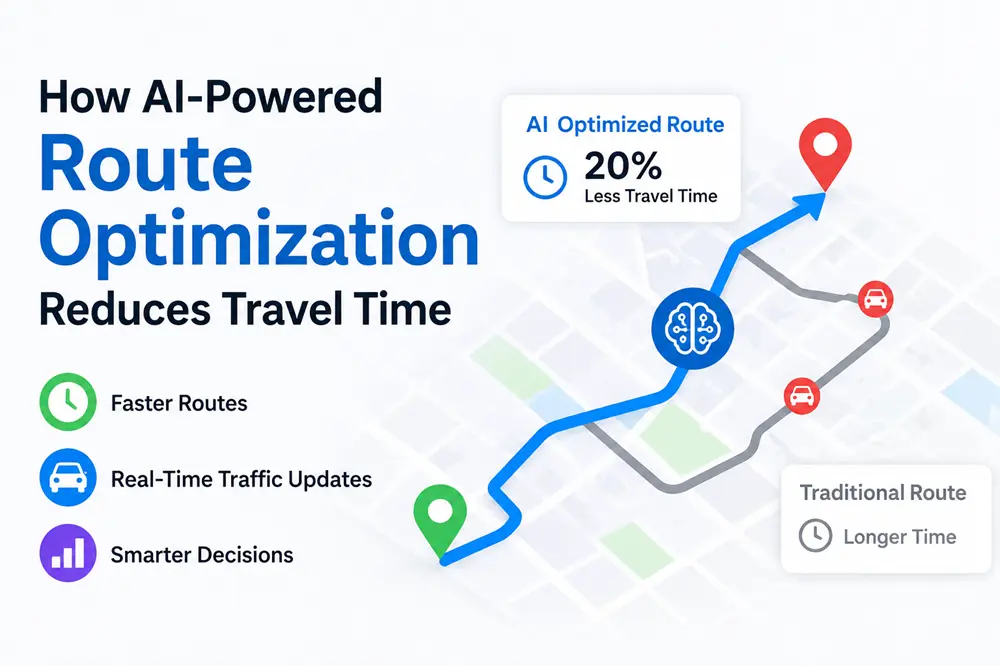
How AI-Powered Route Optimization Reduces Travel Time
There have been notable changes in the transport sector over the past few years due to developments in artificial intelligence, cloud computing, and data analytics in real time. Regardless of whether one is working in a company providing taxis services, logistics, delivery services, or ride-sharing services, effective routing has become crucial for ensuring customer satisfaction and success. The conventional routing technologies mainly aimed at finding the shortest route from one point to another; however, contemporary enterprises require advanced tools capable of addressing the problems caused by changing traffic patterns, closed roads, adverse weather conditions, and other issues. This is when AI-based route optimization technology comes handy.
As the name suggests, AI-based route optimization technology utilizes machine learning and real-time analytics to find the most effective routes for various transportation means. In addition to measuring distances, intelligent routing applications are able to take into account many other variables simultaneously in order to minimize transit time, ensure efficient fuel use, and optimize overall performance. Since the competition within the transport sector keeps increasing due to higher demands, route optimization using AI tools becomes an urgent issue.
Understanding AI-Powered Route Optimization
Optimization of the route is achieved using mapping technologies that calculate routes depending on the road network. Although this method works well most of the time, there are certain situations where this route calculation system cannot take into account the changes in traffic that influence travel times. The use of AI in route optimization allows for constant analysis of data and dynamic adjustments of the routes according to real-time changes.
Artificial Intelligence makes it possible to analyse data obtained through GPS technology, traffic, weather information, road conditions, location of clients, and past experiences. With this technology, it is easier to detect obstacles before the situation occurs, and an alternative route can be proposed before the situation becomes more difficult. It is possible to avoid any inconvenience and ensure that services are provided without delays.
Mobile application development plays a huge role in implementing the use of Artificial Intelligence in route optimization. All the features should be integrated and work together for navigation purposes. In this case, the use of GPS technology and mapping is crucial since the application should provide real-time updates and route suggestions instantly.
Why Traditional Route Planning Falls Short
Optimization of the route is achieved using mapping technologies that calculate routes depending on the road network. Although this method works well most of the time, there are certain situations where this route calculation system cannot take into account the changes in traffic that influence travel times. The use of AI in route optimization allows for constant analysis of data and dynamic adjustments of the routes according to real-time changes.
Artificial Intelligence makes it possible to analyse data obtained through GPS technology, traffic, weather information, road conditions, location of clients, and past experiences. With this technology, it is easier to detect obstacles before the situation occurs, and an alternative route can be proposed before the situation becomes more difficult. It is possible to avoid any inconvenience and ensure that services are provided without delays.
Mobile application development plays a huge role in implementing the use of Artificial Intelligence in route optimization. All the features should be integrated and work together for navigation purposes. In this case, the use of GPS technology and mapping is crucial since the application should provide real-time updates and route suggestions instantly.
The Role of Real-Time Data in Route Optimization
The effectiveness of AI-enabled route optimization can be attributed to its capacity to handle large amounts of data from various sources at once. The modern transportation industry generates vast amounts of data on a second-to-second basis, providing ample opportunity for AI to base its routing decisions upon.
For example, traffic data shows the state of affairs on particular roads to alert AI systems of possible delays. Data about weather patterns indicates possible hazards that may slow down one's drive, such as rain, fog, snowfall, and even flooding. Moreover, GPS-based information allows firms to monitor vehicles' location and assess their route efficiency.
AI-based algorithms utilize all available types of information to build an image of the transportation context. Thus, they can predict any delays, suggest new directions, and modify the route in real-time during the trip. Therefore, drivers face fewer delays on the road while companies offer accurate arrival predictions.
Read more: How AI Improves Software Testing and Quality Assurance
How Machine Learning Improves Route Accuracy
One of the most crucial parts of AI route optimization software is machine learning technology. Traditional navigation systems use only a set of predetermined rules to function, whereas machine learning applications constantly learn and evolve with every new data input.
While moving along various routes, cars equipped with machine learning programs accumulate knowledge about traffic conditions, duration of the journey, road state, and behaviour of the driver. Based on this experience, they can recognize patterns and make predictions regarding future trips, such as daily congestion on a specific route or slower speed during unfavourable weather conditions.
Continuous learning capabilities make machine learning an irreplaceable feature for companies providing transportation services. Instead of using static rules, artificial intelligence becomes smarter after each trip made by the vehicle. In this way, the whole organization benefits from increased efficiency and optimized travel time.
Reducing Travel Time Through Predictive Analytics
Another significant feature that makes AI beneficial for route optimization is predictive analytics. Unlike traditional practices where the reactions to traffic are made only when delays happen, AI solutions utilize the data collected during previous days and hours to predict future events that may disrupt the travel process.
For instance, based on the analysis of the traffic data, if an AI solution determines that a certain road will face some congestion in the upcoming thirty minutes, it can reroute the vehicles and send them to other roads. The same way, if a road closure or bad weather is about to happen soon, the system will suggest an appropriate action.
As you might guess, this approach allows saving the travel time because vehicles are rerouted even before any delays occur.
AI-Powered Route Optimization in Taxi Applications
A taxi booking service is based on the efficiency of its routes, which makes sure of timely pick-ups and quick arrivals. AI can help optimize the route to enable a better match between passengers and drivers and reduce waiting times.
Faster Driver-Passenger Matching
An AI system can take into account the location of drivers, traffic situations, and passenger needs to determine who is the best driver to pick up each individual. Doing so saves time on wait times and ensures that there are enough drivers at all times, especially when there is higher demand.
Smarter Navigation During Trips
After initiating a ride, AI will keep analysing traffic conditions and making any changes to the journey route as may be required. In case there is an accident or congestion up ahead, the AI system will be able to suggest an alternative route, which will make the journey more efficient.
Improved Customer Satisfaction
Customers appreciate quickness, punctuality, and reliable estimates of their arrival time. Route optimization, powered by artificial intelligence, can help taxi companies satisfy these needs, as well as improve efficiency. Customer satisfaction is often associated with business retention and growth in revenues.
Read more: The Complete Software Development Lifecycle Explained
Benefits for Logistics and Delivery Businesses
While taxi apps may be one use case, route optimization is even more useful for logistics and delivery companies that manage large fleets of vehicles. Such firms need to make several deliveries, taking into consideration the aspects of efficiency, budgeting, and consumer demands.
With the help of artificial intelligence, route optimization allows for analysing thousands of possible routes and calculating the optimal order of deliveries. This makes it possible to save on fuel, reduce the strain on vehicles, and lower labour expenses. At the same time, quick deliveries increase client satisfaction.
In order to organize such processes efficiently, many businesses opt for customized Software Development services that allow for integrating route optimization with fleet management, inventory, and customer relationship management systems.
Fuel Efficiency and Cost Reduction
Cutting down the amount of time spent traveling is not only beneficial in ensuring that customers have a good experience; it also goes a long way toward helping firms cut costs. Fuel consumption, maintenance needs, and operation costs occur with each additional minute that the vehicle spends on the road, and using an AI system can go a long way toward minimizing such costs.
For companies with big fleets of vehicles, fuel consumption savings become extremely important. Saving a few minutes of time can translate into large savings when spread out across thousands of trips made by various vehicles. This also means that there will be less wear and tear of the vehicle and therefore less money required to maintain it.
Scalability Through Cloud-Based Infrastructure
AI-driven route optimization technologies of today use cloud computing to efficiently process vast amounts of data. The computational abilities of the cloud environment enable analysis of traffic data, training and processing of machine learning algorithms, and provision of real-time suggestions to drivers.
Cloud technology makes it possible to scale up operations without any loss of performance levels. Companies may either grow from ten vehicles to ten thousand of them or start operating in other regions, serving more clients in an efficient way.
The effective introduction of such solutions is usually linked to excellent Full Stack development capabilities. The development of the back-end part guarantees the ability of various elements to interact, namely the AI engine, cloud components, mobile apps, and operational databases.
Challenges of Implementing AI Route Optimization
Even though AI-based route optimization offers various benefits to businesses, the proper use of this technology depends upon the existence of certain prerequisites. These include data of good quality as well as appropriate cloud-based infrastructures and machine learning capabilities.
Accuracy is essential in ensuring that AI will make decisions based on the most recent information and not on outdated data. Otherwise, the results may be inaccurate and negatively influence the estimates of travel time.
Furthermore, businesses should take into consideration potential cyber threats associated with using this innovation. The implementation of such technology may require some expenses, but long-term advantages may compensate for the initial cost.
The Future of AI-Powered Route Optimization
The route optimization for the future will be very dependent upon the developments made in the realms of AI, autonomous vehicles, intelligent transportation systems, and smart city infrastructure development. As technology progresses, the accuracy levels of AI algorithms when it comes to traffic prediction and route optimization will increase exponentially.
With innovations like 5G and IoT becoming widespread in the future, these systems will have quicker access to real-time information. The result would be near-instant changes in the routing system to ensure delays are minimized. Future transport systems will see the use of autonomous vehicles that can interact with these algorithms for efficient traffic avoidance.
Conclusion
The implementation of route optimization software in the transportation industry is making things easier for companies in terms of decreasing their travel time and increasing the effectiveness of the overall process. With the application of various machine learning techniques, prediction methods, real-time analysis, and intelligent decision-making, AI-based route optimization can make the process much more efficient. Whether you have taxi booking services, logistics and delivery, or any other transportation company, using such software might be necessary if you want to stay ahead of your competitors.
Our company like Dinoustech is here to assist you in leveraging technology to create innovative transportation solutions that will work in your best interest. We implement AI-based systems within modern development practices to ensure the creation of effective platforms.