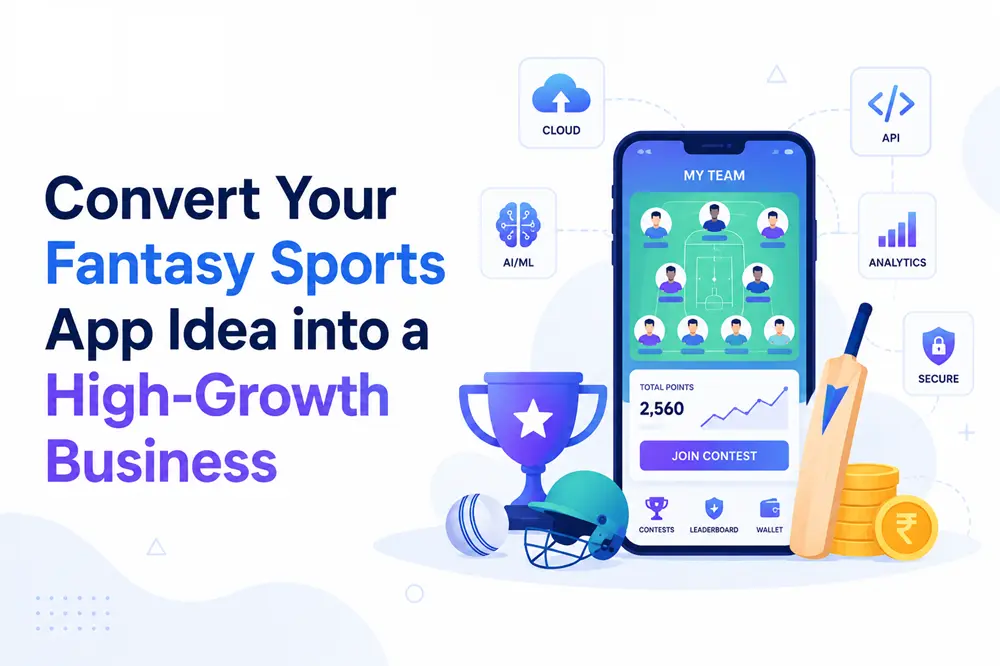
Convert Your Fantasy Sports App Idea into a High-Growth Business
Fantasy sports have become one of the fastest-growing segments in the online gaming industry. Millions of sports enthusiasts participate in fantasy contests every day, creating virtual teams, competing with other users, and winning rewards based on real match performances. With the increasing popularity of cricket, football, basketball, kabaddi, and other sports, the demand for feature-rich fantasy sports applications continues to grow worldwide.
For entrepreneurs and startups, this presents an excellent opportunity to build a profitable digital business. However, transforming a simple app idea into a successful fantasy sports platform requires much more than coding an application. It involves understanding market trends, selecting the right business model, creating an engaging user experience, implementing secure payment systems, and continuously improving the platform based on user feedback. A well-planned fantasy sports app development strategy can help businesses attract loyal users, generate recurring revenue, and establish a strong presence in the competitive gaming industry.
Choosing an experienced fantasy app development company is equally important because the success of your application depends on its scalability, performance, security, and user engagement. A development partner with industry expertise can help you avoid common mistakes, reduce development costs, and launch your platform faster without compromising quality.
In this guide, we'll explore the key steps involved in converting your fantasy sports app idea into a high-growth business, from validating your concept to building a feature-rich platform that keeps users engaged for years.
Validate Your Fantasy Sports App Idea Before Development
Every successful digital product starts with validating the business idea. While your concept may seem promising, understanding whether there is actual market demand is essential before investing time and money into development. Market validation helps you identify your target audience, understand competitors, and determine whether your idea solves a real problem for sports fans.
Begin by researching existing fantasy sports platforms operating in your target market. Analyze their strengths, weaknesses, pricing models, user reviews, contest formats, and engagement strategies. Instead of copying competitors, focus on identifying gaps that your application can fill. Perhaps users want a simpler interface, faster withdrawals, better customer support, or support for additional sports. These insights can help shape a unique value proposition for your platform.
It's also important to define your target audience. Will your app focus primarily on fantasy cricket enthusiasts, or will it include football, basketball, baseball, and other sports? Will you target casual users, experienced fantasy players, or both? Understanding user preferences allows you to prioritize features that matter most.
Working with a professional fantasy sports app development company during the planning phase can help refine your idea further. Experienced developers can recommend the best architecture, technology stack, and feature roadmap based on current market trends. Validating your idea before development minimizes risks and lays the foundation for a successful product.
Also Read: - Grow Your Sports Business with Fantasy Sports App Development
Create a Strong Business Model That Generates Consistent Revenue
Building a fantasy sports application without a clear monetization strategy can make it difficult to achieve sustainable growth. While attracting users is important, converting engagement into revenue is what turns an app into a successful business. Defining your business model early helps you design features and user journeys that support long-term profitability.
One of the most common revenue models is contest entry fees, where users pay a small amount to join competitions while the platform earns a commission from the total prize pool. This model works well because it creates recurring revenue with every contest. Subscription plans are another effective option, allowing users to access premium contests, advanced analytics, exclusive rewards, or ad-free experiences through monthly or annual memberships.
Advertising and sponsorships also offer valuable revenue opportunities. Sports brands, equipment manufacturers, and event organizers often look for highly engaged audiences, making fantasy sports platforms attractive advertising channels. Referral programs, affiliate partnerships, and in-app promotions can generate additional income while encouraging user growth.
A reliable fantasy app development company can help integrate these monetization features seamlessly without affecting the user experience. The goal is to create multiple revenue streams so your business is not dependent on a single income source. Diversifying revenue improves financial stability and supports future expansion as your platform grows.
Build an Engaging User Experience That Keeps Players Coming Back
No matter how innovative your business idea is, users will only continue using your platform if it delivers a smooth and enjoyable experience. User experience has become one of the biggest factors determining the success of fantasy sports applications. If the interface feels confusing or slow, users can easily switch to competing platforms.
A successful fantasy sports application should make every action simple, from registration and wallet management to team creation and contest participation. New users should be able to understand the platform without needing lengthy tutorials. Clear navigation, attractive layouts, responsive design, and fast loading times significantly improve customer satisfaction.
The onboarding process deserves special attention. Allow users to register quickly using mobile numbers, email addresses, or social media accounts. Once logged in, guide them through the basics of creating a fantasy team and joining contests. Reducing unnecessary steps improves conversion rates and minimizes user drop-offs.
Personalization also enhances engagement. Display recommended contests based on user interests, previous participation, and favourite sports. Push notifications can remind users about upcoming matches, contest deadlines, leaderboard updates, and promotional offers without becoming intrusive.
Investing in user-cantered fantasy sports app development helps build trust and encourages repeat participation. When users enjoy their experience, they are more likely to recommend your platform to friends, contributing to organic business growth.
Must Read: - Create a Fantasy App Like Howzat: Development Process & Business Model
Include Essential Features That Deliver a Complete Fantasy Sports Experience
The features you include in your fantasy sports app directly influence user satisfaction and business success. Modern users expect more than basic contest participation—they want an interactive platform that offers convenience, transparency, and excitement throughout their gaming journey.
A complete fantasy sports application should include secure user registration, profile management, team creation tools, live match updates, multiple contest formats, digital wallet integration, secure payment gateways, referral programs, leaderboards, and push notifications. These core features ensure users can participate in contests smoothly while managing their accounts efficiently.
Real-time score updates are particularly important because they keep users engaged throughout live matches. Instant leaderboard updates create excitement by allowing participants to track their rankings as player performances change. Secure wallet functionality simplifies deposits, withdrawals, and prize distribution, while customer support features help resolve issues quickly.
Administrators also require powerful backend tools for managing users, monitoring contests, verifying transactions, handling disputes, and generating business reports. Without an efficient admin panel, scaling operations becomes increasingly difficult as the user base grows.
An experienced fantasy web development company ensures that every feature works together seamlessly, delivering a reliable and engaging platform capable of supporting thousands of simultaneous users. Focusing on feature quality rather than quantity creates a better user experience and supports sustainable business growth.
Choose the Right Technology Stack for Long-Term Scalability
Behind every successful fantasy sports application is a powerful technology stack that ensures speed, security, and reliability. Choosing the right technologies from the beginning helps your platform handle increasing user traffic, live match updates, secure transactions, and future feature enhancements without performance issues.
Cross-platform frameworks such as Flutter and React Native allow businesses to launch Android and iOS applications faster while reducing development costs. For companies seeking maximum performance, native development using Kotlin for Android and Swift for iOS remains a strong option. Backend technologies like Node.js, Java Spring Boot, and Python are commonly used to process user requests, manage contests, and handle real-time updates efficiently.
Databases such as PostgreSQL and MongoDB store user profiles, contest information, payment records, and player statistics securely. Redis is often used for caching and improving response times during live sporting events when thousands of users access the platform simultaneously. Cloud infrastructure from providers like AWS, Google Cloud Platform, or Microsoft Azure enables automatic scaling based on traffic demand, ensuring uninterrupted service during major tournaments.
Security should also be integrated into the technology stack through encrypted communications, secure authentication, fraud detection systems, and regular vulnerability testing. Since fantasy sports platforms manage financial transactions and sensitive user information, investing in robust infrastructure protects both your business and your users.
Selecting an experienced fantasy sports app development company ensures that your technology stack is designed not only for current requirements but also for future business expansion. A scalable technical foundation allows you to introduce new sports, advanced features, international markets, and larger user communities without rebuilding the platform from scratch.
Also Read: - The Rising Demand for Fantasy Sports Apps: Opportunities and Future Trends
Build a Strong Marketing Strategy to Acquire and Retain Users
Developing a high-quality fantasy sports application is only half the journey. No matter how advanced your platform is, it cannot become a high-growth business without a consistent flow of users. A well-planned marketing strategy helps you attract new players, increase app downloads, and build a loyal community that continues participating in contests throughout the year.
Search Engine Optimization (SEO) is one of the most effective long-term marketing strategies. Publishing informative blogs, fantasy sports guides, match previews, player analysis, and sports-related content can improve your website's visibility on search engines and drive organic traffic. Along with SEO, App Store Optimization (ASO) helps improve your app's ranking on Google Play Store and Apple App Store by optimizing titles, descriptions, screenshots, and user reviews.
Social media marketing also plays a vital role in promoting fantasy sports platforms. Regular updates about upcoming matches, contest announcements, winner stories, and promotional campaigns help keep users engaged. Platforms like Instagram, Facebook, X (formerly Twitter), and YouTube allow businesses to connect directly with sports fans and build brand awareness.
Referral programs are another highly effective growth strategy. Rewarding users for inviting friends creates organic growth while reducing customer acquisition costs. Many successful fantasy sports platforms offer bonus cash, free contest entries, or wallet credits for successful referrals.
Email marketing and push notifications further strengthen user retention. Personalized reminders about upcoming contests, promotional offers, and live match updates encourage users to return regularly. However, notifications should be relevant and well-timed to avoid overwhelming users.
Partnering with sports influencers, bloggers, and content creators can also increase brand credibility. Influencers already have engaged audiences who trust their recommendations, making influencer marketing an excellent channel for attracting targeted users.
Businesses investing in fantasy app development should allocate sufficient resources to marketing because consistent user acquisition and retention are essential for long-term business success.
Prioritize Security, Compliance, and Fair Play
Trust is one of the most valuable assets for any fantasy sports business. Users share personal information, complete financial transactions, and expect fair competition whenever they join contests. Any security breach or unfair practice can significantly damage your brand's reputation and result in customer loss.
The first priority should be securing user accounts through encrypted authentication, strong password policies, OTP verification, and multi-factor authentication. These measures reduce the risk of unauthorized access and account misuse. Financial transactions should also be protected using secure payment gateways and encrypted communication protocols to safeguard deposits, withdrawals, and prize distributions.
Fair play is equally important. Contest rules should be transparent, scoring systems should be accurate, and winner selection should be based entirely on real player performances. Integrating trusted live sports data providers ensures that points are updated accurately and consistently throughout every match.
Depending on your target market, your platform may also need to comply with local gaming regulations, data privacy laws, and financial transaction guidelines. Working with an experienced fantasy sports app development company helps ensure your application is built according to relevant legal and technical standards.
Regular security audits, penetration testing, fraud detection systems, and continuous monitoring further strengthen platform reliability. Users are more likely to trust and recommend a fantasy sports application that consistently demonstrates fairness, transparency, and data security.
Must Read: - Is Now the Right Time to Invest in Fantasy App Development?
Avoid Common Mistakes That Can Slow Business Growth
Many promising fantasy sports startups struggle not because of poor ideas, but because they overlook critical business and technical factors during development. Learning from these common mistakes can save significant time, money, and effort while improving your chances of long-term success.
One of the biggest mistakes is launching without proper market research. Building features that users don't actually need often results in low engagement and poor retention. Understanding customer expectations before development helps prioritize features that deliver real value.
Another common issue is trying to launch with too many complex features. While innovation is important, an overloaded application can confuse users and delay development. It is often better to launch with a strong core product and introduce additional features through regular updates.
Poor user experience is another major challenge. Slow loading speeds, complicated navigation, difficult registration processes, and confusing contest participation discourage users from returning. A simple, intuitive interface should always remain a top priority.
Many businesses also underestimate the importance of scalability. During major tournaments, user activity can increase dramatically. Without scalable infrastructure, the platform may experience downtime, slow performance, or transaction failures. Investing in cloud-based architecture during fantasy app development helps handle sudden traffic spikes efficiently.
Ignoring customer feedback is another costly mistake. Users often provide valuable suggestions that can improve features, fix usability issues, and enhance overall satisfaction. Businesses that continuously listen to their users are more likely to maintain long-term growth.
Finally, choosing an inexperienced development partner can create unnecessary technical challenges. An experienced fantasy sports app development company understands industry requirements, reducing development risks while delivering a reliable and scalable platform.
Future Trends Shaping Fantasy Sports App Development
The fantasy sports industry continues to evolve rapidly as new technologies reshape user expectations. Businesses that embrace innovation early are more likely to maintain a competitive advantage and attract long-term users.
Artificial Intelligence is becoming increasingly important in fantasy sports applications. AI-powered recommendation engines can analyze player statistics, previous contests, and user behavior to suggest optimal team selections and personalized contest recommendations. This helps both new and experienced users make informed decisions.
Machine Learning is improving fraud detection, user segmentation, and engagement analysis. By studying user behavior, platforms can offer customized rewards, promotions, and content that increase participation rates.
Blockchain technology is also gaining attention for its ability to improve transparency and security. Blockchain-based reward systems, digital wallets, and transaction verification can increase user confidence while reducing fraud risks.
Gamification continues to enhance user engagement through achievement badges, loyalty programs, seasonal challenges, daily rewards, and leaderboard competitions. These features encourage users to participate more frequently while strengthening brand loyalty.
The integration of augmented reality (AR), virtual reality (VR), and wearable devices may further transform fantasy sports experiences in the coming years. Users could eventually interact with live statistics, immersive match experiences, and real-time fantasy insights in entirely new ways.
As technology advances, businesses investing in fantasy website development should remain adaptable and continuously update their platforms to meet changing user expectations. Innovation is one of the key drivers of long-term success in the fantasy gaming industry.
Conclusion
Turning a fantasy sports app idea into a high-growth business requires much more than technical development. It demands a clear business vision, detailed market research, user-focused design, robust security, effective marketing, and a commitment to continuous improvement. Every stage of the development process contributes to creating a platform that attracts users, keeps them engaged, and generates sustainable revenue.
Success begins with validating your idea and identifying the unique value your platform will offer. From there, choosing the right business model, developing essential features, selecting scalable technologies, and implementing strong security measures help create a reliable foundation for growth. Marketing strategies such as SEO, social media campaigns, referral programs, and influencer partnerships further expand your user base and strengthen your brand presence.
Partnering with a trusted fantasy sports app development company like Dinoustech can significantly simplify this journey. An experienced development team brings technical expertise, industry knowledge, and strategic guidance that help transform innovative ideas into successful digital products. Whether you're targeting a niche audience or planning a global fantasy sports platform, working with professionals reduces development risks and accelerates your time to market.
The fantasy sports industry continues to offer enormous opportunities for entrepreneurs willing to invest in quality, innovation, and user experience. By focusing on customer satisfaction, adopting modern technologies, and continuously improving your platform, your business can establish a strong position in this rapidly growing market.
A well-executed fantasy sports app development strategy is not just about building an application—it's about creating a scalable digital business that delivers value to users, builds lasting customer relationships, and achieves sustainable growth in the years ahead.